Journal / Screen Time
Screen Time and Child Development: The Research, Summarized Honestly
What the strongest studies actually show about screens and kids' brains, sleep, attention, and mental health — without the panic and without the excuses.
LOUP Editorial · May 10, 2026
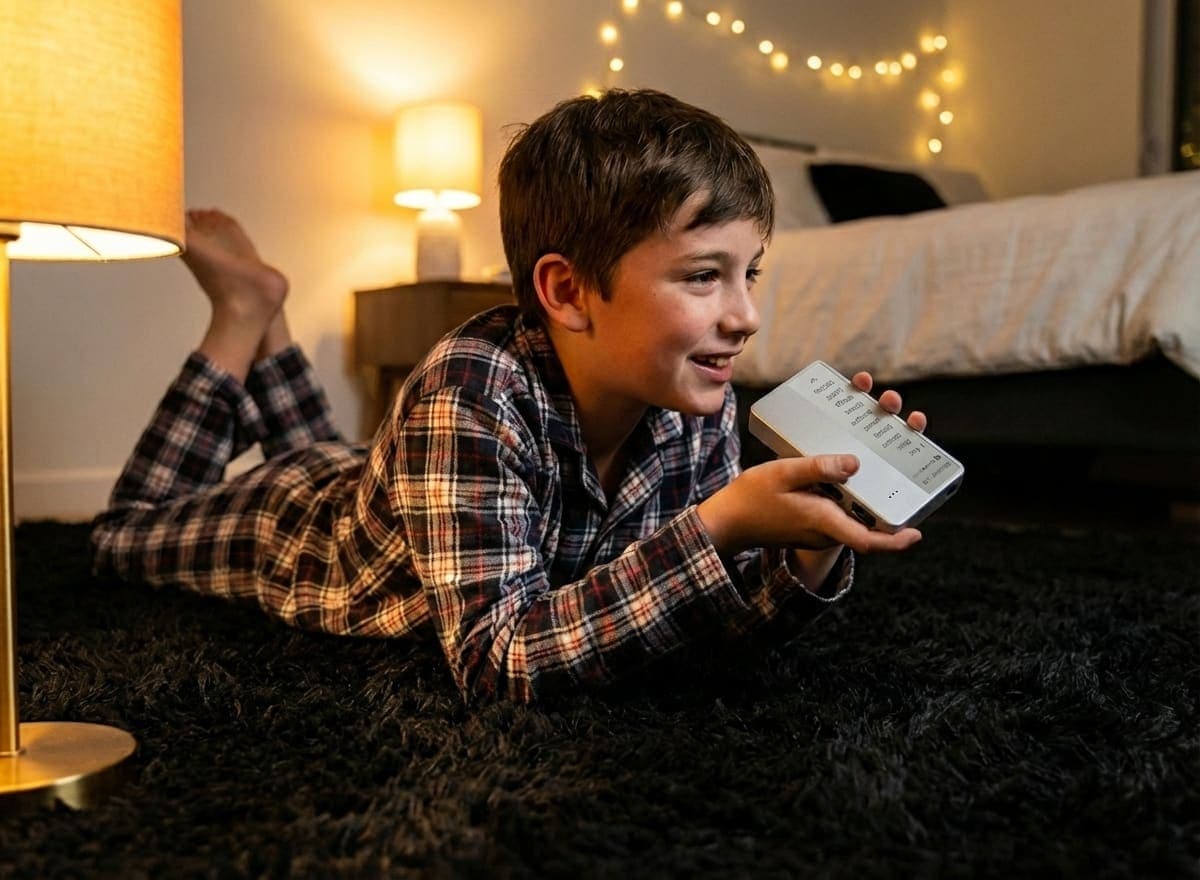
Screen time research is a mess of correlations, moral panic, and industry-funded reassurance. But underneath the noise, a few findings replicate consistently enough that most serious researchers accept them. Here's the honest version.
Sleep: the clearest finding
The strongest, most replicated effect is on sleep. Screens in the bedroom delay sleep onset, reduce total sleep, and degrade sleep quality — through blue light, arousal, and the simple fact that the feed never ends. And sleep loss in childhood cascades into attention, mood, and learning problems. If you change one thing, remove the glowing screen from the bedroom.
Attention and displacement
The displacement hypothesis holds up well: hours on screens are hours not spent in free play, face-to-face conversation, boredom (which drives creativity), and physical activity — the inputs childhood development actually runs on. Fast-cut, high-stimulation content also correlates with attention difficulties in younger children, though causality is harder to pin down.
Mental health: the adolescent inflection
For teens — especially girls — heavy social media use correlates with anxiety, depression, and self-harm, with the steepest curves after 2012, when smartphones plus front cameras plus algorithmic feeds converged. Correlation isn't proof, but natural experiments (staggered Facebook rollouts, Instagram's own internal research) push most honest readers toward 'this is doing damage.' Our first phone age guide covers what this means for timing.
What doesn't hold up
Blanket 'all screens rot brains' claims don't survive scrutiny. A video call with grandpa is not a TikTok binge. Content and context dominate: passive algorithmic consumption is the risk profile; communication and creation are largely fine. That distinction is LOUP's entire design thesis — voice connection is the healthy slice of what a phone does, so we built a device that's only that slice.
The practical takeaway
Protect sleep absolutely, delay the algorithmic feed as long as socially possible, and don't confuse connection with consumption. Kids need to talk to people who love them. They don't need a slot machine to do it.